
WOLLVAC Poultry Vaccine Solution
Newcastle Disease Vaccine for Chickens
WOLLVAC provides Newcastle Disease vaccine solutions for chickens, focusing on Sub-genotype VII field pressure, trivalent live vaccine immunization, VII-type inactivated vaccine boosting, antibody monitoring and multivalent poultry vaccine programs for farms, veterinarians, distributors and importers.
APMV-1
Newcastle Disease Virus classification
Newcastle Disease Virus classification
VII
Major prevalent sub-genotype pressure
Major prevalent sub-genotype pressure
VII + VGGA + V4
WOLLVAC live vaccine antigen direction
WOLLVAC live vaccine antigen direction
>=3×109.0
VII inactivated antigen titer before inactivation
VII inactivated antigen titer before inactivation
What Is Newcastle Disease Virus in Chickens?
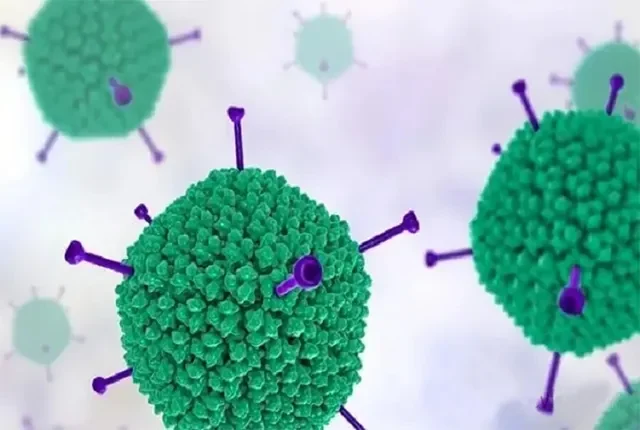
Newcastle Disease Virus (NDV) belongs to Avian Paramyxovirus Type 1 (APMV-1), genus Avulavirus, family Paramyxoviridae. It is one of the most serious viral threats to poultry production and can cause severe respiratory, digestive, neurological and production losses.
NDV can be present in infected poultry tissues, organs, body fluids, secretions and excreta. The supplied technical material notes that the highest viral load can be found in the brain, spleen and lungs, while the longest viral persistence may be observed in the bone marrow.
Newcastle Disease prevention cannot rely on vaccine alone. It requires breeding management, epidemic prevention, disinfection, immunization, treatment support and regular monitoring as a complete control system.
Key point: Sub-genotype VII Newcastle Disease Virus has become a major prevalent strain in recent years. It spreads rapidly and shows strong pathogenicity, so traditional vaccine programs may not be enough in high-risk markets.
Clinical Signs And Production Impact
Newcastle Disease Can Cause Fast, Severe and Costly Losses
Newcastle Disease can cause respiratory symptoms, diarrhea, neurological signs, egg production decline and high mortality in young poultry. Early diagnosis, scientific immunization and antibody monitoring are critical for flock protection.
01
Respiratory Signs
Dyspnea, breathing difficulty and tracheal lesions may occur when NDV affects the respiratory system.
02
Digestive Signs
Diarrhea and green feces may be observed in infected flocks, especially during severe disease pressure.
03
Neurological Symptoms
Neurological disorders can appear in affected birds and are a serious sign of Newcastle Disease infection.
04
Egg Production Loss
Laying hens may show a significant drop in egg production, creating direct economic losses.
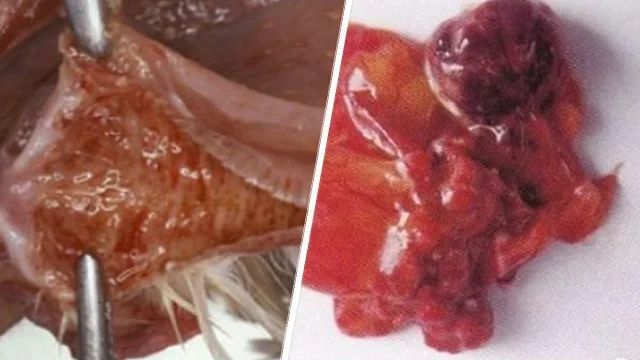
Clinical examples: tracheal hemorrhage and follicular hemorrhage are common signs highlighted in the supplied NDV material.
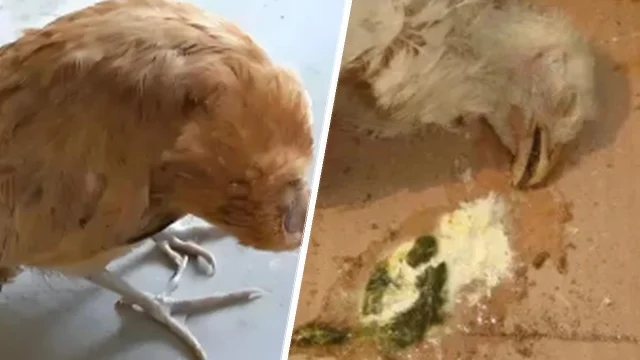
Clinical examples: neurological signs and green feces may indicate severe Newcastle Disease pressure.
Why Newcastle Disease Vaccine Strain Strategy Matters
Newcastle Disease vaccine strains differ in virulence, tissue tropism and administration suitability. Virulence is commonly assessed using MDT, ICPI and IVPI, with ICPI regarded as an important indicator for pathogenicity.
The supplied material lists respiratory-tropic strains such as LaSota, Clone30, CS2, N79 and HB1, as well as enterotropic strains such as VG/GA and V4/VH. The correct strain should be selected according to bird age, administration route and farm immune status.
For drinking water vaccination, enterotropic strains such as VH and V4 are particularly valuable. The supplied material notes that the effectiveness of respiratory-tropic strains such as LaSota and Clone30 may decrease by more than 50% when used through drinking water, while VH and V4 are far less affected.
Product communication point: When customers ask for Newcastle vaccine, confirm the country, bird age, laying period status, current ND antibody level, administration route, field strain pressure and whether Sub-genotype VII protection is required.
NDV Strain Reference
Common Newcastle Disease Vaccine Strain Characteristics
Different ND vaccine strains have different tropism and suitable administration routes. This table helps buyers understand why WOLLVAC emphasizes VII + enterotropic strain strategy.
| Strain | Key Characteristics | Tropism | Common Applicability |
|---|---|---|---|
| VG/GA | Natural attenuated strain with low ICPI and minimal virulence. | Enterotropic | Ideal for spray and drinking water vaccination in day-old chicks. |
| LaSota | Common strain with strong immunogenicity and ability to overcome maternal antibodies. | Respiratory | Often used by eye drop / intranasal administration after 7 days of age. |
| V4 / VH | Natural attenuated strain with mild and stable virulence. | Enterotropic | Suitable for poultry of all ages and valuable for drinking water vaccination. |
| Clone30 | Derived from LaSota, mild virulence and less affected by maternal antibodies. | Respiratory | Suitable for young chickens, but drinking water efficiency may be reduced. |
| CS2 | Derived from I strain by cloning and optimization, slightly reduced virulence. | Respiratory | For secondary immunization of 30-day chickens; often SC or IM injection. |
| HB1 | Older strain; induces slow and weak immunity in the supplied material. | Respiratory | Mainly for IO/IN use; not ideal for drinking water vaccination. |
Recommended WOLLVAC Products
Newcastle Disease Vaccine Options for Chickens
Compare live, inactivated and multivalent Newcastle disease vaccine options for different flock ages, field pressures and combined disease risks.
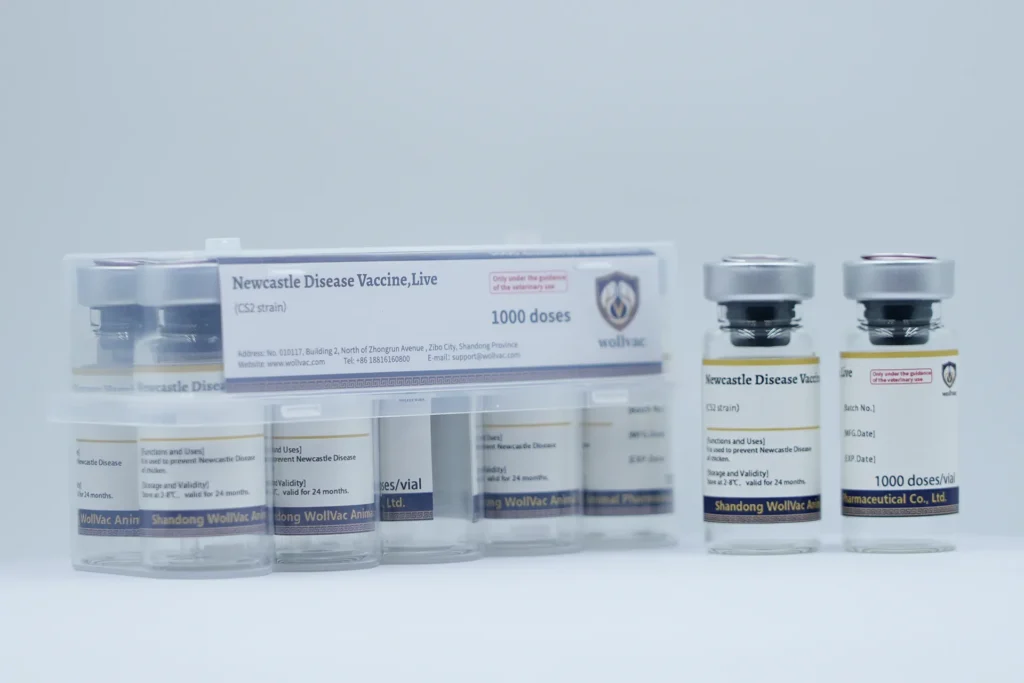
Wolive ND CS
Newcastle Disease Live Vaccine (CS2 Strain)
CS2Live vaccine
Live vaccine for the prevention of Newcastle disease in chickens.
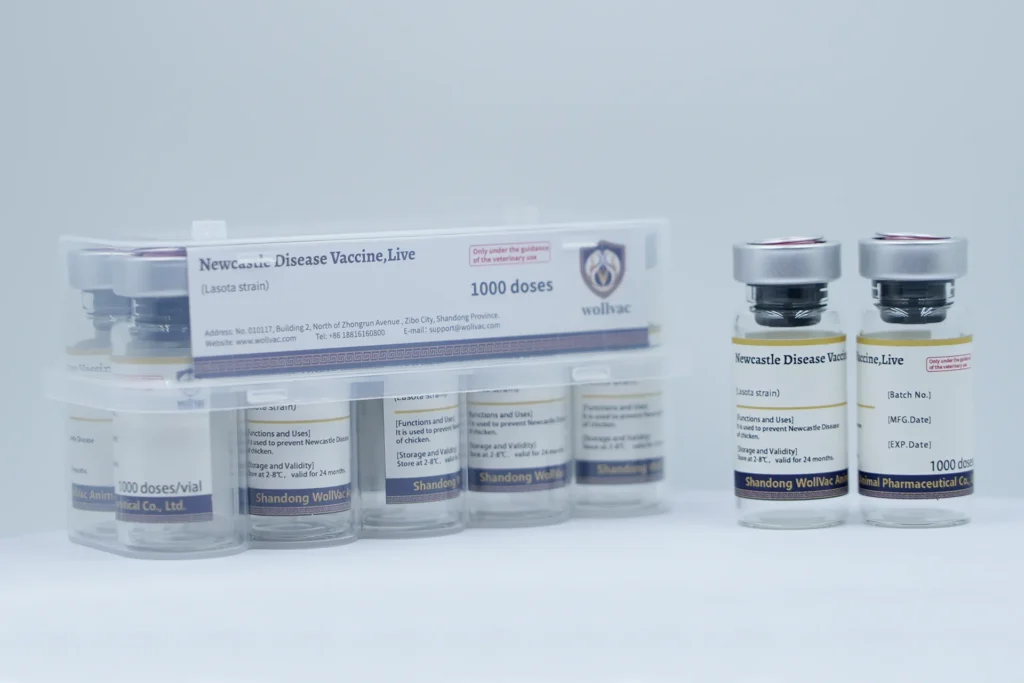
ND Vaccine, Live
Newcastle Disease Live Vaccine (La Sota Strain)
La SotaLive vaccine
Live Newcastle disease vaccine option for routine poultry immunization programs.
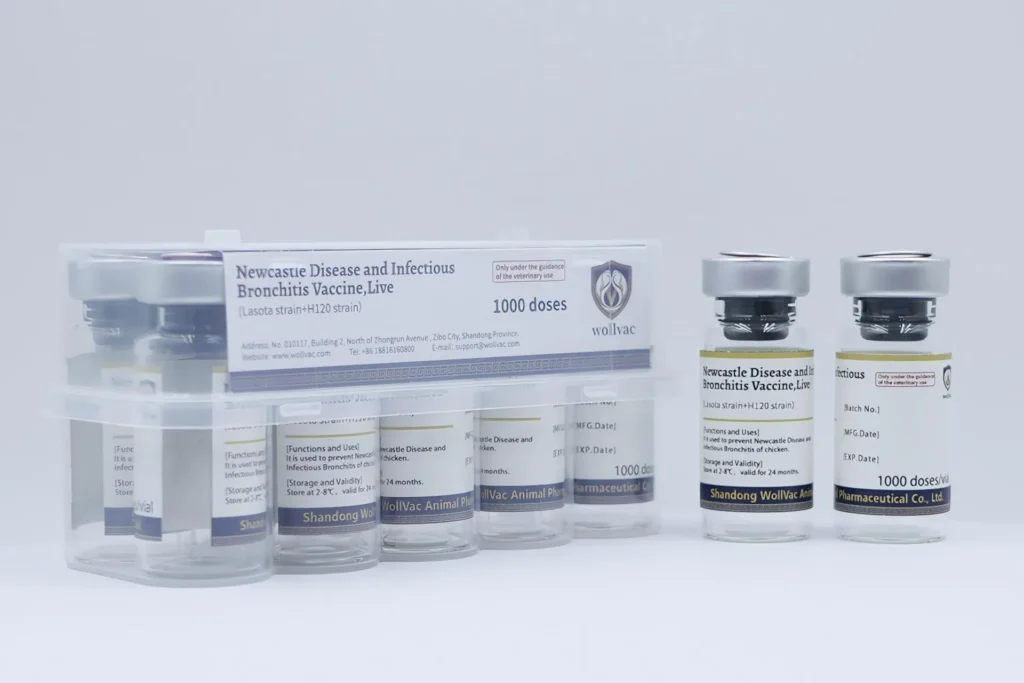
Wolive ND+IB Pro
Newcastle Disease and Infectious Bronchitis Live Vaccine
La Sota + A-VIIH120M41
Combined live vaccine direction for Newcastle disease and infectious bronchitis control.
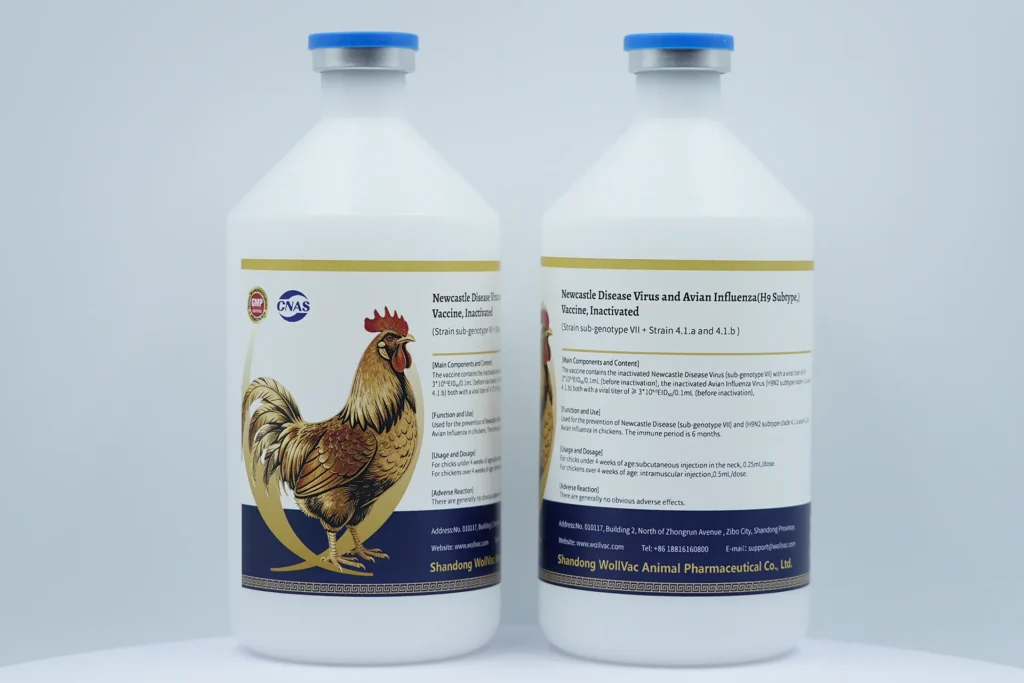
Wovac ND+AI
Newcastle Disease and Avian Influenza (H9 Subtype) Vaccine, Inactivated
La SotaH9N2
Inactivated combination vaccine for Newcastle disease and H9 subtype avian influenza.
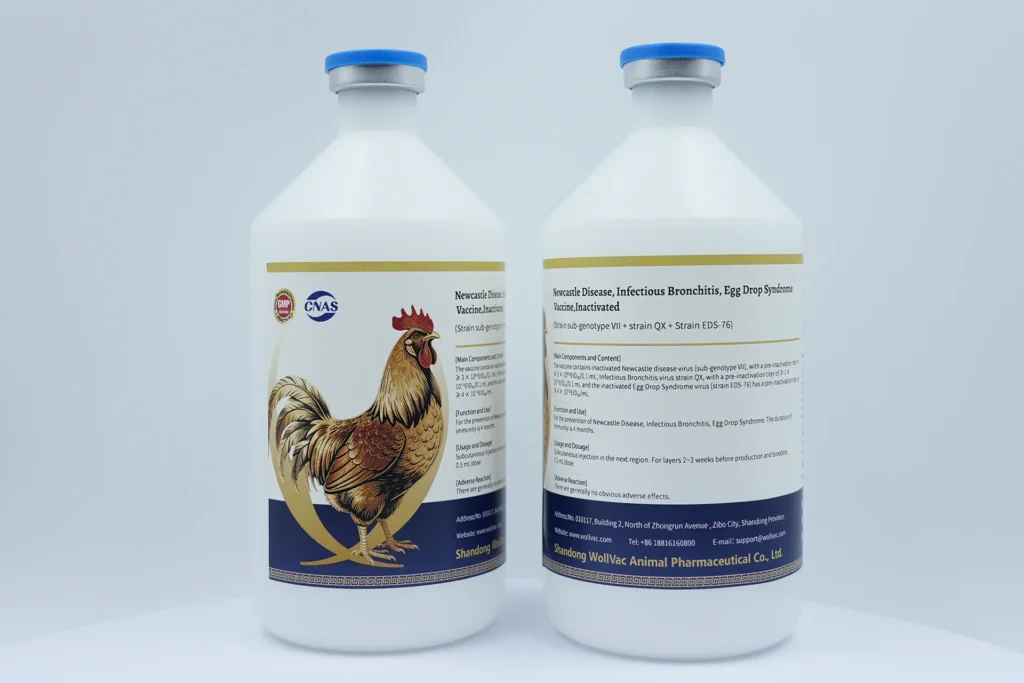
Wovac NBE
Newcastle Disease, Infectious Bronchitis and Egg Drop Syndrome Vaccine, Inactivated
La SotaM41EDS-76
Three-way inactivated protection for Newcastle disease, infectious bronchitis and egg drop syndrome.
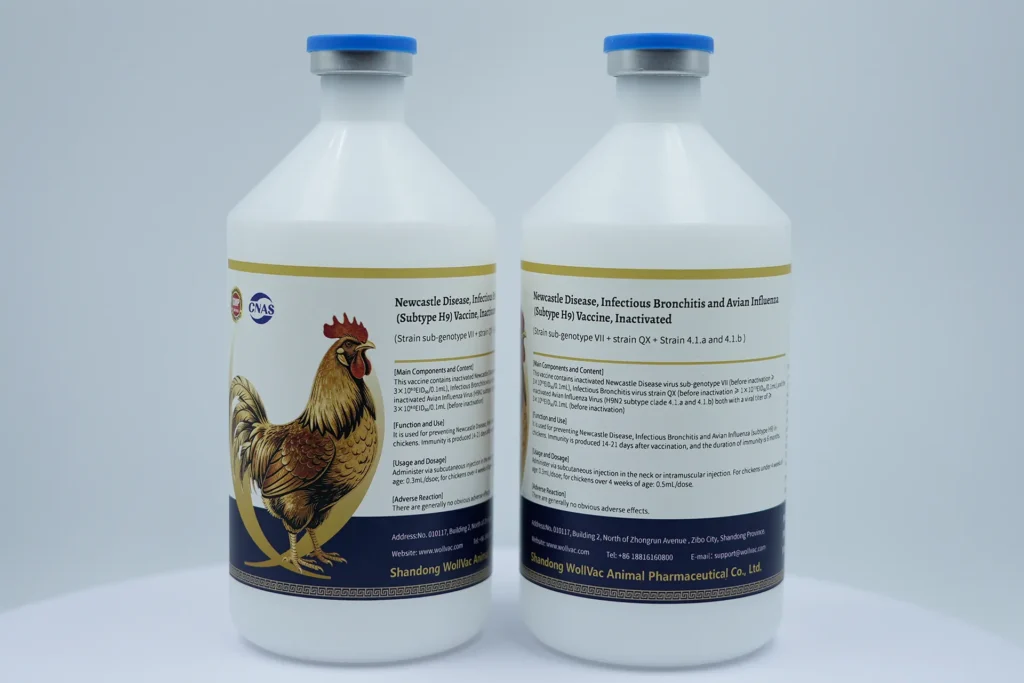
Wovac NBA
Newcastle Disease, Infectious Bronchitis and Avian Influenza (H9) Vaccine, Inactivated
La SotaM41H9N2
Inactivated combination option for ND, IB and H9 subtype avian influenza pressure.
Wovac NE
Newcastle Disease and Egg Drop Syndrome Vaccine, Inactivated
La SotaEDS-76
Inactivated vaccine for Newcastle disease and egg drop syndrome protection.
Wovac NBD
Newcastle Disease and Infectious Bursal Disease Vaccine, Inactivated
Newcastle diseaseIBDV
Inactivated combination vaccine for Newcastle disease and infectious bursal disease.
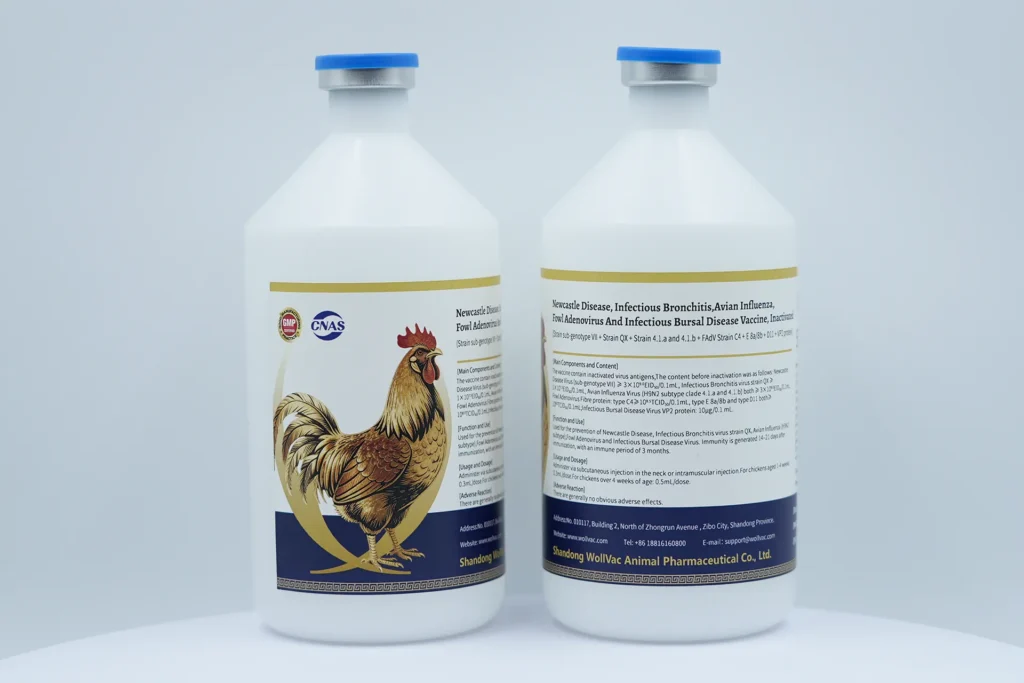
Wovac NBAFD
ND, IB, H9 Avian Influenza, Fowl Adenovirus and IBD Vaccine, Inactivated
NDIBH9N2FAdVIBDV
Five-valent inactivated protection for poultry farms facing complex combined disease pressure.
Product composition, specifications, immune program, dosage, administration route and label claims must follow the officially registered product label in the target market. This page is intended for product selection, distributor communication and technical inquiry guidance.
Product Selection Guide
How to Choose a Newcastle Vaccine Direction
Select ND vaccine products according to Sub-genotype VII pressure, administration route, antibody level, bird age, production stage, maternal antibody status and co-infection risk.
| Field Situation | Recommended Product Direction | Main Purpose | Buyer Concern Addressed |
|---|---|---|---|
| Day-old chicks need early protection | WOLLVAC Newcastle Disease Trivalent Live Vaccine | Early local immunity and practical spray vaccination | Day-1 vaccination, high-risk chick period, rapid flock coverage |
| Drinking water vaccination is required | Trivalent live vaccine with enterotropic VGGA / V4 strain direction | Maintain better drinking-water vaccination performance | Reduced effectiveness of respiratory strains through drinking water |
| Sub-genotype VII pressure is high | WOLLVAC Sub-genotype VII ND Inactivated Vaccine | Targeted and sustained antibody response | Poor control from traditional vaccine programs |
| ND and IB coexist | ND + IB vaccine direction | Combined respiratory disease prevention planning | Program simplification and early respiratory protection |
| ND + AI pressure exists | ND + AI or ND + IB + AI vaccine direction | Broader respiratory disease complex support | Mixed infection, production loss and respiratory challenge |
| Complex disease pressure | ND + IB + AI + FADV + IBD direction | Comprehensive poultry vaccine portfolio | Multiple disease risks and distributor product-line expansion |
Core Technology
WOLLVAC Newcastle Vaccine Technology Highlights
WOLLVAC Newcastle Disease vaccine solutions are designed around Sub-genotype VII targeting, enterotropic strain strategy, live-inactivated combination, adjuvant technology and impurity reduction.
01
Sub-genotype VII Targeting
Inactivated vaccine direction uses Sub-genotype VII antigen to match the major prevalent strain pressure in many markets.
02
Trivalent Live Vaccine Strategy
Live vaccine antigen direction includes Sub-genotype VII, VGGA and V4 strains for broader Newcastle Disease program communication.
03
Enterotropic Strain Advantage
VGGA and V4 are enterotropic strains, suitable for spray and drinking water vaccination scenarios.
04
Imported Adjuvant System
French white oil and imported aqueous/oil emulsifier are combined with proprietary emulsification technology to enhance immune response.
05
Low Viscosity & Transport Stability
Low viscosity supports easier injection. Supplied material notes heat resistance up to 40 C during long-distance transport for 5-7 days.
06
Ultrafiltration Concentration Process
Imported Millipore equipment and efficient microporous membranes help remove urate, non-specific proteins and impurities, reducing immune side effects.
07
Imported Inactivator Direction
Imported inactivator process is used to help protect antigen immunogenicity and reduce post-vaccination side effects.
Immunization Strategy
ND Control Requires Live + Inactivated Vaccines and Antibody Monitoring
A practical Newcastle Disease prevention program should combine live vaccine priming, inactivated vaccine boosting, strict biosecurity, regular antibody monitoring and farm management.
01
Combine Live and Inactivated
Live vaccines produce local mucosal antibodies and activate immune response; inactivated vaccines support strong and long-lasting immunity.
02
Monitor HI Antibody Titers
The supplied material notes that HI titer <=1:2^8 indicates weak resistance, while >=1:2^9 is relatively reliable.
03
Choose Route by Strain
Enterotropic strains are better suited for drinking water vaccination, while respiratory strains often require IO/IN or other routes.
04
Improve Farm Biosecurity
Strengthen all-in/all-out management, closed breeding, disinfection, feeding nutrition and stress reduction.
05
Adjust Program by Antibody Level
Regular monitoring helps determine immunization timing and keeps flocks at effective antibody levels.
06
Prepare Emergency Plan
During outbreaks, high-dose attenuated vaccines may be considered with veterinary evaluation and secondary infection control.
Detailed dose, immune age, administration route and emergency vaccination decision should follow official product label, local regulations and qualified veterinary guidance.
Who This Page Is For
Newcastle Vaccine Support for Different Buyers
WOLLVAC supports farms, veterinary service providers, distributors and importers with Newcastle Disease vaccine product information, strain strategy communication, antibody monitoring discussion and registration-related document support.
FM
Poultry Farms
Request ND vaccine directions for respiratory signs, mortality risk, green feces, neurological signs and egg production loss.
VET
Veterinary Teams
Discuss field strain pressure, HI antibody titers, vaccine route, live-inactivated program and outbreak response.
DI
Distributors
Build a Newcastle vaccine portfolio with live vaccine, VII inactivated vaccine and multivalent poultry options.
IM
Importers
Request product specifications, label information, registration-related documents and cooperation support.
Need Newcastle Vaccine Information for Your Market?
Tell us your country, poultry type, NDV strain concern and current antibody / vaccination program. WOLLVAC will help you identify suitable Newcastle vaccine directions.
FAQ
Newcastle Vaccine FAQ
Common questions from poultry farms, veterinarians, distributors and importers when selecting Newcastle Disease vaccines.
What is Newcastle Disease Virus?
Newcastle Disease Virus belongs to Avian Paramyxovirus Type 1 (APMV-1). It is a major poultry pathogen that can cause respiratory signs, diarrhea, neurological symptoms, egg production decline and high mortality in young birds.
Why is Sub-genotype VII important for Newcastle vaccine selection?
The supplied material states that Sub-genotype VII has become a major prevalent strain in recent years, spreads rapidly and shows strong pathogenicity. Therefore, vaccine programs should consider VII-specific antigen matching.
What antigens are included in WOLLVAC Newcastle Disease trivalent live vaccine?
The supplied material lists Sub-genotype VII, VGGA strain and V4 strain, each at >=10^6.0 EID50 / dose, as the antigen direction for WOLLVAC Newcastle Disease live vaccine series.
What is the role of WOLLVAC Sub-genotype VII inactivated vaccine?
The inactivated vaccine uses Sub-genotype VII antigen with a viral titer of >=3×10^9.0 EID50 / 0.1 mL before inactivation, supporting targeted and longer-lasting antibody response against VII-related pressure.
Should live and inactivated ND vaccines be used together?
Yes. Live vaccines can produce local mucosal antibodies and activate immune response, while inactivated vaccines provide stronger and longer-lasting antibody response. A combined program is often used for brooding / rearing and pre-laying stages.
Can Newcastle vaccines be given through drinking water?
Drinking water vaccination depends heavily on strain suitability. The supplied material notes that enterotropic VH and V4 strains are suitable for drinking water vaccination, while respiratory strains such as LaSota and Clone30 may lose significant effectiveness through this route.
How should antibody testing guide Newcastle Disease vaccination?
Regular HI antibody testing helps determine immunization timing. The supplied material notes that flocks with HI titer <=1:2^8 may not resist highly virulent NDV well, while >=1:2^9 is considered relatively reliable.
Can WOLLVAC support distributors with registration documents?
Yes. Distributors can request product details, specifications, label information, storage conditions and registration-related communication. Exact documents depend on product availability and destination-market regulatory requirements.
Request Newcastle Vaccine Product Information
Submit your target country, poultry type, NDV disease concern and product requirements. WOLLVAC will help you identify suitable Newcastle vaccine directions and provide product information.
Support: ND Live Vaccine / Sub-genotype VII Inactivated Vaccine / Multivalent Vaccine Options / Label / Specification / Registration Documents
Suitable For: Poultry Farms, Veterinarians, Distributors and Importers
Email: info@wollvac.com